Syeda Tahmina Ahmed
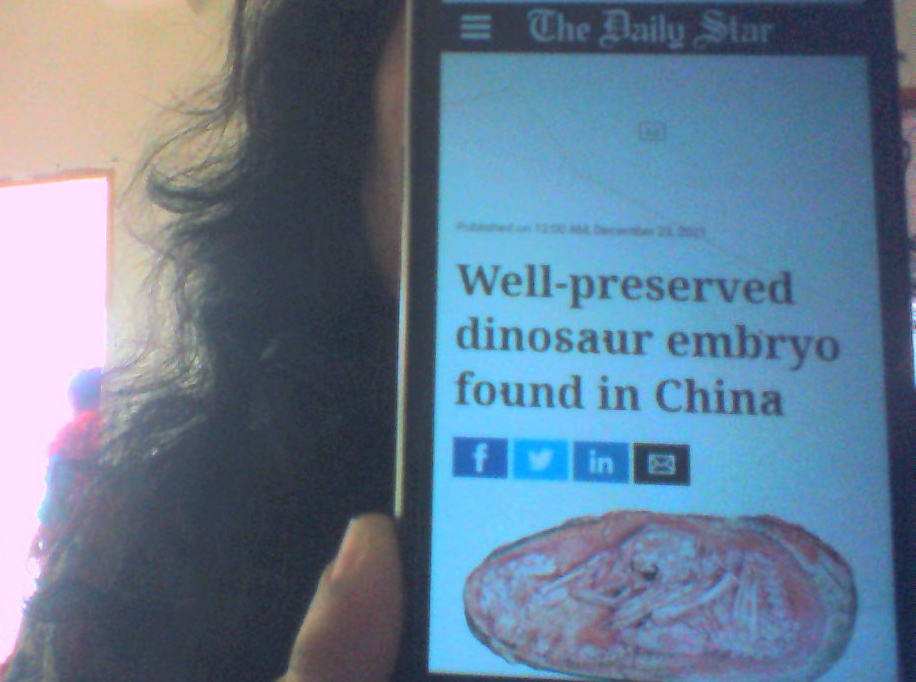
Discovered in Southern China and forgotten in the storage of the University of Birmingham for decades, Baby Yingliang, the Oviraptorosaur's embryo fossil, finally sets a link to the origin of modern birds' behavior of hatching from the eggs. Through a possible mudslide and at least 66 million years, the posture of the embryo is perfectly preserved in its shell and presents evidence on the ancestors of birds of the modern age. The fossil is a magnificent manifestation of how birds 'tuck' themselves to arrange their bodies, legs, and arms before hatching. The posture birds and alternatively crocodiles have adopted to protect their heads simultaneously to break off the shell effectively with their beaks prove that these behaviors controlled by the central nervous system resulted from the evolution from their feathered, vegan, dinosaur ancestors. Scientists will next dig further into the skeleton system of the creatures by high-resolution x-ray imaging after removing the rocks from the fossil.

